Notes from this year's sessions on planning, AI, entrepreneurship and adaptability.
01
Gillian
Planning and Project Management
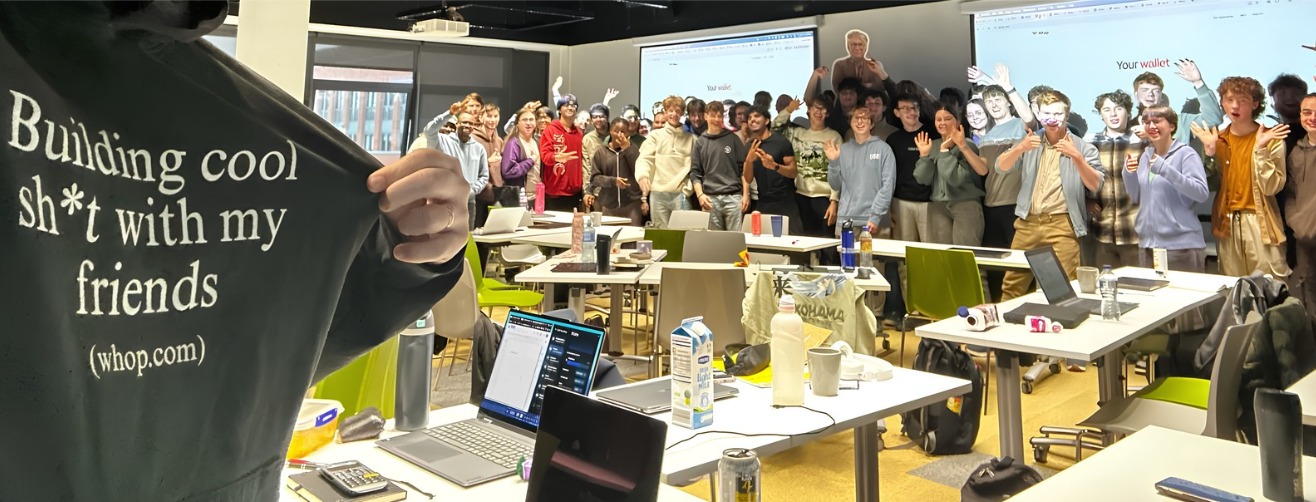
The main idea of this session was planning, initially looking at career planning (or the lack thereof), before moving into project management and how to balance the three main constraints of a project: cost, time and scope.
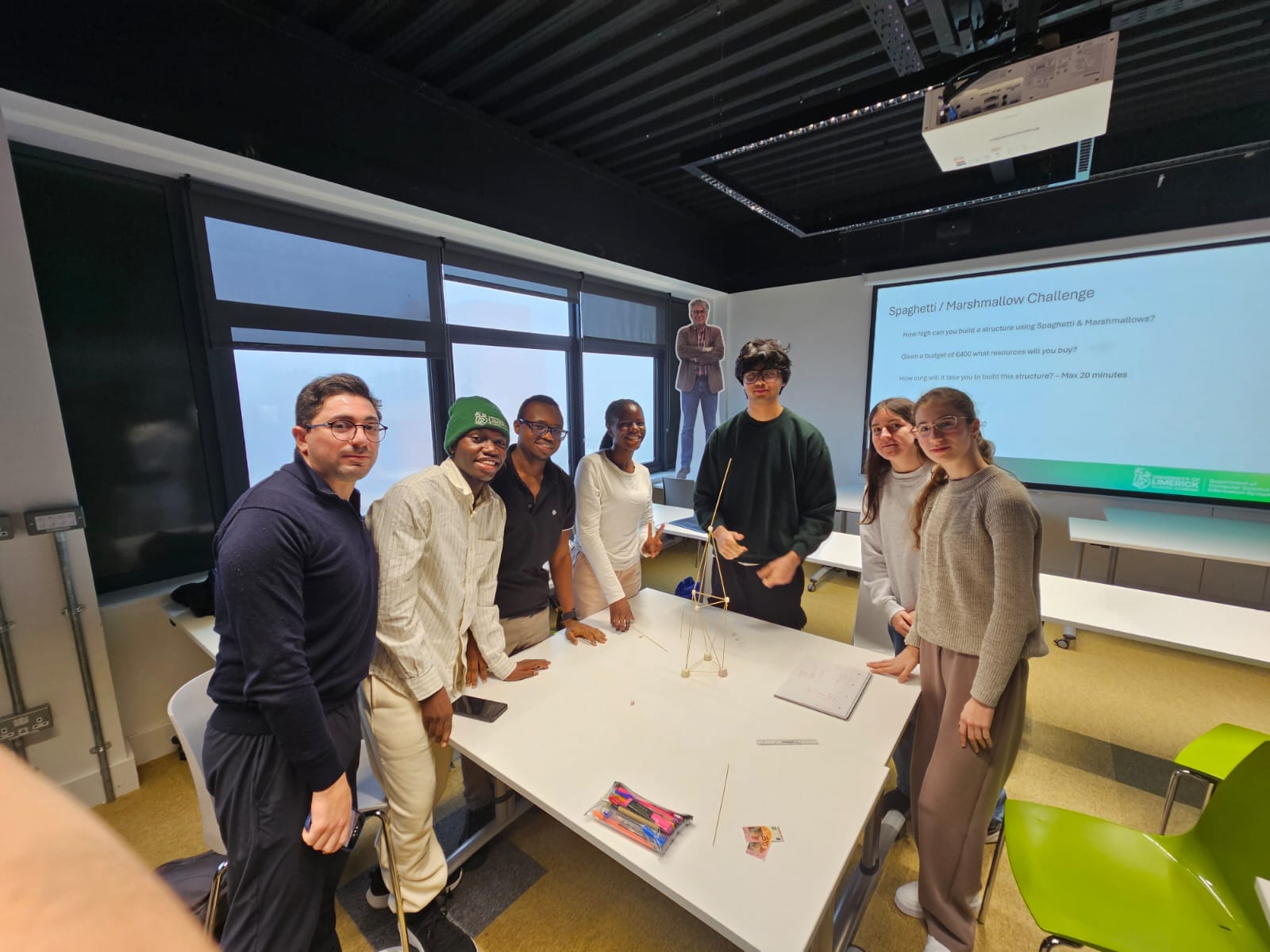
During the activity, we had to build a tower using spaghetti and marshmallows while working with a limited budget and time. Although my group spent considerably more time planning than most others, we still had to adapt our approach as the activity progressed. This included responding to what other groups were doing and making use of the spare time and budget we had towards the end.
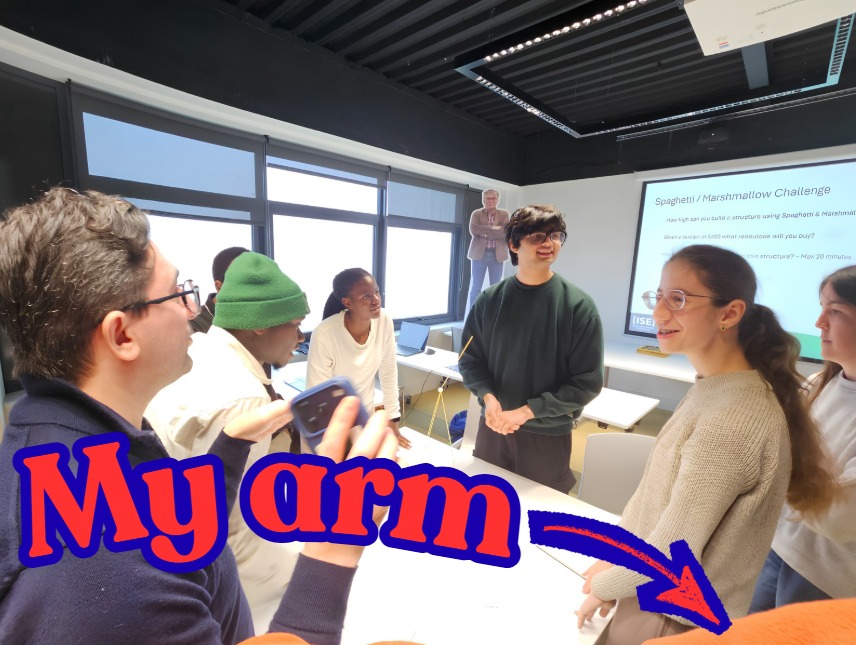
I was behind the camera : (
I think the biggest takeaway for me was that I had a somewhat naive view of planning. I previously saw it as either having no plan and working freely or having a rigid, detailed plan that you follow regardless of circumstances. In reality, effective planning is somewhere in the middle: having enough structure to stay on track while retaining the flexibility to adapt.
Looking back at my own projects, I've experienced both sides of this. During my Astra Autolites internship, my relatively unstructured and agile approach allowed me to go from planning to delivering the entire project in just three days. However, during the DevOps project in Block 1.1, a lack of control over scope led to the project consuming almost all my OOP study time, ultimately contributing to my grade dropping from 80% in the midterm to 40% in the final.
That said, I still think an unstructured approach has its place. With my current macropad project, for example, the goal is learning rather than delivering a finished product, so being able to change scope and explore things I find challenging is beneficial.
Going forward, I want to be more deliberate about setting boundaries and milestones while retaining the flexibility to adapt when needed.
02
CSIS Hackathon
AI Panel
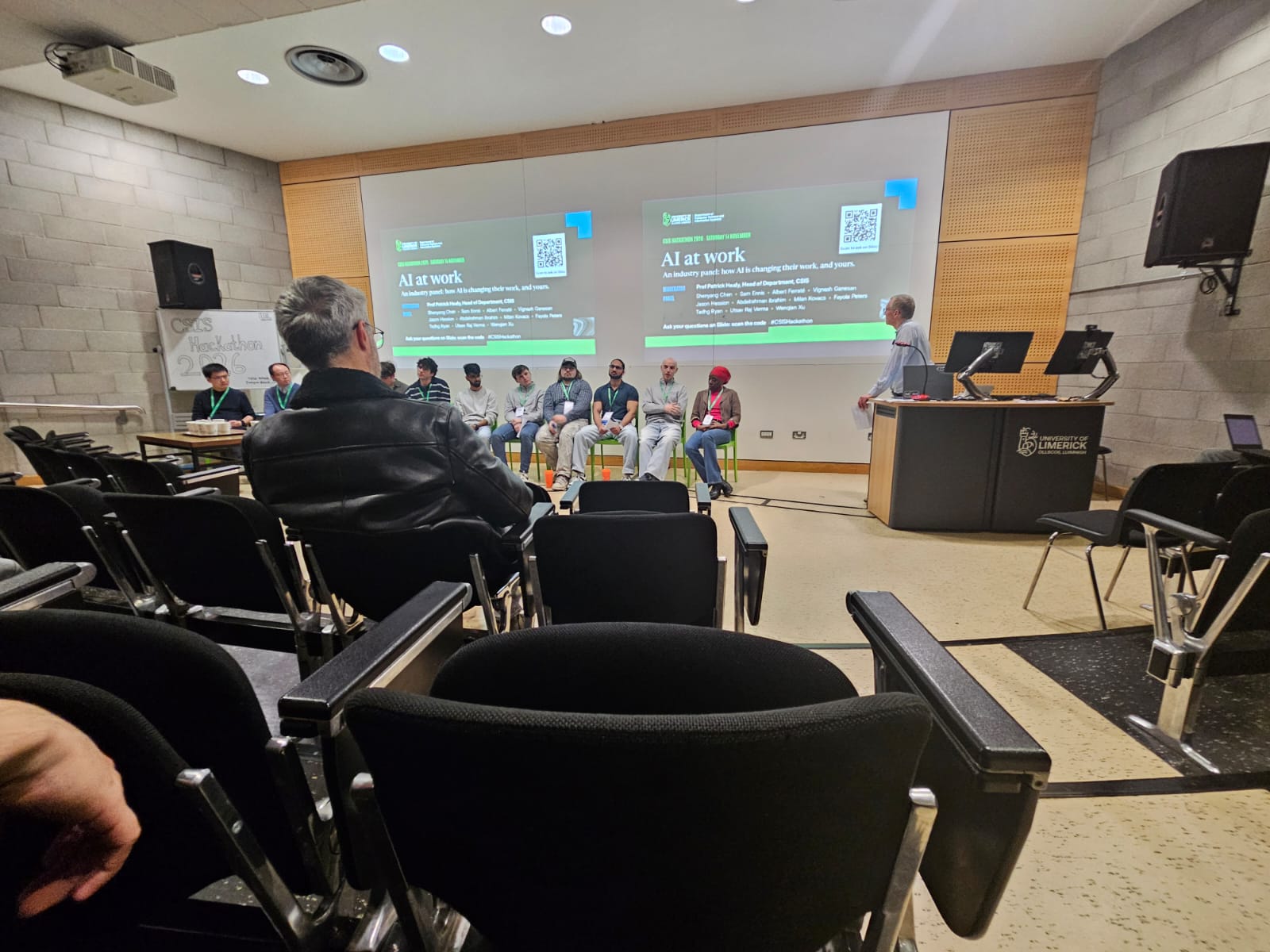
One of the main takeaways from the AI panel at the CSIS Hackathon was that AI in software engineering is here to stay, and rather than resisting it, we need to learn how to use it effectively.
However, something I found particularly interesting was the discussion around “AI psychosis” and how developers can become overly reliant on AI, eventually losing track of what their code actually does and why certain decisions were made. What surprised me was that this isn't just a problem for inexperienced developers; even experienced engineers can fall into the same trap. This reinforced the importance of slowing down occasionally, reviewing AI-generated work and making sure you actually understand what you're building.
This challenged my own approach somewhat. I regularly use AI to speed up development, troubleshoot problems and explore unfamiliar technologies. While I try to understand the solutions it provides, I can see how easily using it as a productivity tool could turn into relying on it to do the thinking for me. Especially while I'm still developing my technical foundations, I think maintaining the ability to solve problems independently is important.
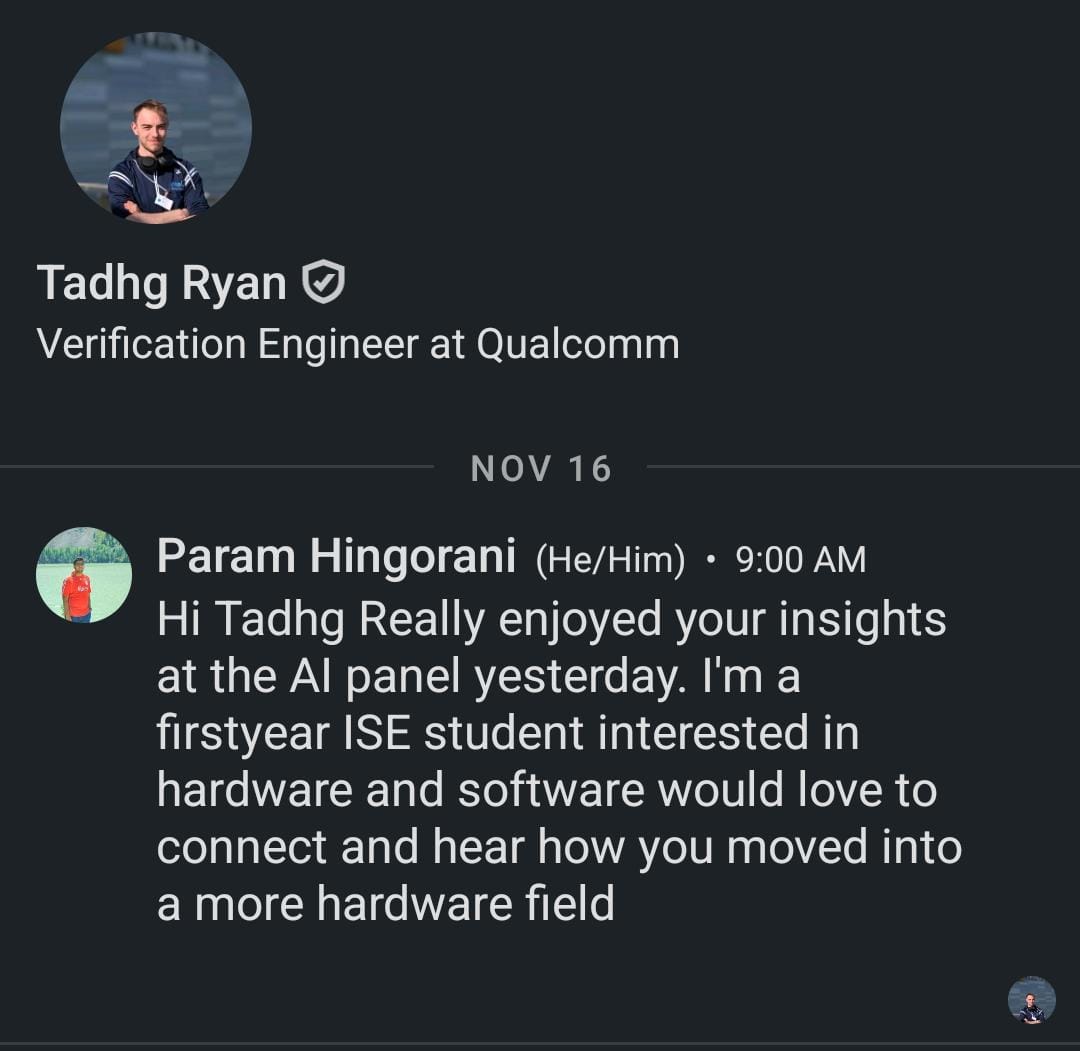
Another interesting part of the panel was hearing about the different career paths available in the industry. One speaker had transitioned from a Computer Science degree into a pre-silicon verification engineering role. As someone interested in working closer to hardware, potentially in firmware or embedded systems, I was keen to learn more about how he made that transition. I reached out through LinkedIn and they accepted my connection request, although I haven't received a reply yet.
Overall, the panel reinforced the importance of learning to work alongside AI without becoming dependent on it. It also encouraged me to explore career paths beyond conventional software development, particularly those that combine hardware and software.
03
Eoin
Entrepreneurship, Collaboration and Career Development
Eoin's session gave me an interesting perspective on entrepreneurship, particularly the importance of having the right people around you and being able to adapt when things don't go to plan. Having heard his journey from his university final-year project to founding two startups, what stood out to me wasn't necessarily the technology itself, but the decisions and people behind it.
One point I found particularly valuable was the importance of having co-founders whose strengths and weaknesses complement your own. Eoin started his first company with two close university friends, and it made me consider how important this is when working on something as demanding as a startup. It's easy to focus on finding people who share your interests and enthusiasm, but having people who bring different skills and perspectives can be just as important. I think this applies beyond entrepreneurship too, particularly in software engineering teams where technical ability alone isn't enough.
His experience also reinforced the importance of adaptability. His original idea involved tracking patients in hospitals using Wi-Fi signal strengths, but COVID-19 disrupted the planned implementation, forcing the company to pivot towards contact tracing and tracking items in production facilities. This made me realise that even a well-developed idea and a promising business plan can be undermined by circumstances outside your control. Being able to recognise when something isn't working and redirect your efforts is therefore an important skill.
I also took away some of his more practical advice: talk to more people, be more candid rather than excessively polite, and actively look for problems that others are experiencing. This is something I want to improve, particularly when networking and exploring opportunities.
This session also reminded me of Hoplite, a YC '26 startup founded by two ISE dropouts and funded by the Collison brothers of Stripe. Their example makes entrepreneurship feel considerably more tangible, as it's something people from the same course and environment are actively pursuing.
Overall, the session encouraged me to look beyond simply developing technical skills and place more importance on collaboration, networking and identifying problems worth solving.
04
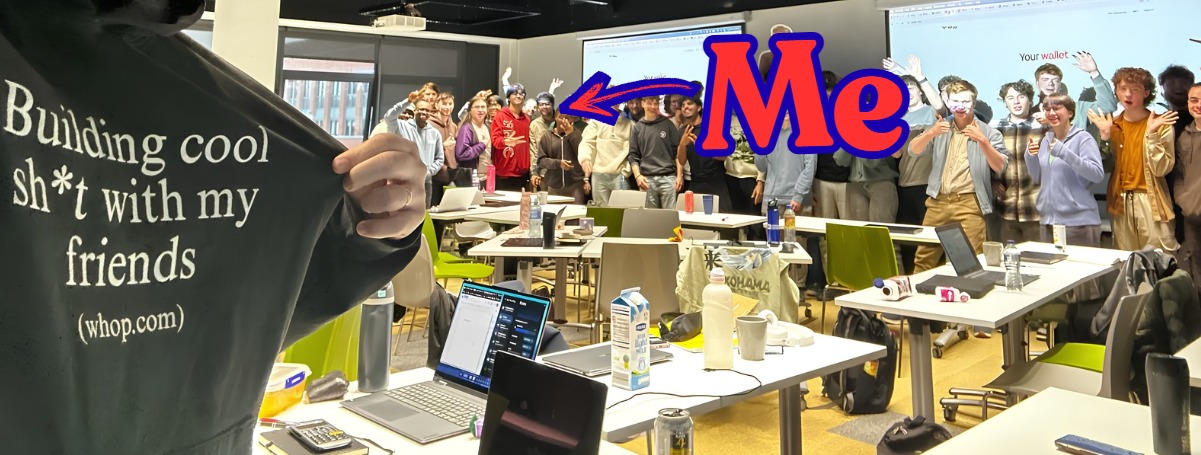
Whopathon
AI-Assisted Development and Entrepreneurship
The Whopathon was particularly interesting because it gave me an opportunity to apply some of the things we've been learning in a more entrepreneurial setting. My partner and I developed a startup concept called Vibcheck, intended to verify AI-generated code for issues such as security vulnerabilities. We used AI extensively to develop our initial checklist and website before presenting the concept to the class.
One of my biggest takeaways was how much AI can accelerate the early stages of product development. We were able to go from an idea to a reasonably convincing prototype in a relatively short period of time. However, it also highlighted a distinction that I think is becoming increasingly important in software engineering: the difference between building something that looks like a product and building something that actually works. We managed to develop the website and initial verification checklist, but never got as far as implementing the automated code parser, which would arguably be the most technically challenging and important part of the product.
This made me think more critically about AI-assisted development. While it can dramatically reduce the time needed to get started, it doesn't remove the need for technical understanding or proper implementation. In fact, I think this becomes even more important when the product itself is intended to verify the quality and security of AI-generated code.
I also enjoyed approaching a project from a business perspective rather than simply focusing on the technical implementation. Identifying a problem created by the growing popularity of AI-generated code and developing a potential solution was a different way of thinking about software development.
My partner and I are considering developing Vibcheck further over the Christmas break. I would particularly like to tackle the automated analysis component and see whether we can turn the initial concept into something genuinely useful.
Overall, the experience made me more interested in exploring entrepreneurship alongside software engineering and showed me how quickly an idea can develop when you combine technical skills with AI tools.
05
Meta-reflection
The Importance of Adaptability
Birgit's international academic career, Eoin's unconventional entrepreneurial journey and Gillian's discussion of flexible planning all reinforced the importance of adaptability. This is something I've experienced myself since moving from India to Ireland, where adapting has extended beyond university and career decisions to even everyday life, from adjusting to a climate that is almost the complete opposite of what I'm used to, to navigating a new culture and environment. I also see this reflected in ISE's alternating residencies and university teaching, where being able to adjust to different environments and expectations is essential. It's made me realise that adaptability isn't just about responding to major changes, but also being willing to embrace and learn from the smaller, everyday challenges.